The second project is the one which we will be giving all our attention to after the 180 degree film is edited and uploaded because we want this film to show everything that we have be tort in media and hope that it will look as amazing as we imagine. This film is really going to test us because there isn't a direct link to another film that we could use as help. This is because we have combined two ideas/genres together to create what we hope will be unique film, to some extent.
The hybrid genre that we want to create is a mix between war thrillers and psychological thrillers because our questionnaires exposed that the youth of today are looking for new psychological thrillers more than others however we didn't want to make a generic psychological thriller because so many others had tried this in media because we as the youth of today like them. So, as a group we came to the decision to create a new hybrid of thriller which younger people would enjoy however would still be new. The reason behind this is because by creating a new hybrid genre it opens windows to pick and choose the conventions that we like from both genres and combine them to create this film. However this doe create more work for us because we then have to research more genres and and then go through the process of seeing what we liked. In the long run I hope this extra work will pay off.
Another point is that this film requires another level of editing that I myself have just started to I think that this is going to be a real push to try and make the film look at a semi-professional level. To make sure that I am up to the challenge I will be research about the way in which these editing techniques are used. For example: Keying, Matting, Chroma-Keying, Colour Grading and 3D Motion Graphics. All of these will serve a purpose in our film to make it look its best.
This is just a small brief of what a huge task is ahead of us.
Monday, 19 January 2015

First Project -180 Degree Rule
The first project that we are aiming to shoot today is the 180 degree rule, which we have already done test shots of shown in previous blog posts. The idea is that after school today we will of filmed the hole 180 degree rule and have it edited by next week. The reason this may be a challenge is because members of our group may be unable to make the shoot therefore we may have to move the day.
Another problem is that I think that the film should be longer and to do this we need a fight or we need to prolong the stare down.
This is a problem because to have a fight I would prefer to use by brother as an actor. This is because although I'm sure that Katy or Mariella wouldn't mind punching me in the face I know that my brother can do it due to the many fight scenes for our films already. The second problem is that to cut out the fight scene to prevent me needing my brother we would have to prolong the stare which would require use changing the storyboard because I don't think that the camera angles used at the moment create enough tension to hold the audience any longer. To overcome this problem I am going to propose to my group that we change some aspects of the storyboard.
To improve the film further I am going to use my own camera with an X-Grip allowing the camera to stay smooth within the last shoot when it is moving around the character. Furthermore I shall be using one of the schools tripods if required to keep the camera dead still. Lastly if we film this after school it should mean clearer audio because the school will be quieter compared with the test shots which had to have music to cover up the noise.
Another problem is that I think that the film should be longer and to do this we need a fight or we need to prolong the stare down.
This is a problem because to have a fight I would prefer to use by brother as an actor. This is because although I'm sure that Katy or Mariella wouldn't mind punching me in the face I know that my brother can do it due to the many fight scenes for our films already. The second problem is that to cut out the fight scene to prevent me needing my brother we would have to prolong the stare which would require use changing the storyboard because I don't think that the camera angles used at the moment create enough tension to hold the audience any longer. To overcome this problem I am going to propose to my group that we change some aspects of the storyboard.
To improve the film further I am going to use my own camera with an X-Grip allowing the camera to stay smooth within the last shoot when it is moving around the character. Furthermore I shall be using one of the schools tripods if required to keep the camera dead still. Lastly if we film this after school it should mean clearer audio because the school will be quieter compared with the test shots which had to have music to cover up the noise.
Sunday, 18 January 2015
Why do the 180 Degree rule? (Basic)
The 180 degree isn't a static rule in the sense that we could break it without the world ending however to break this rule it is important that we as a group understanding what we are doing otherwise our audience will be left confused.
For example this rule is best explained through a conversation between two characters because they are looking at eachother. If I wanted to shoot this from a wide angle then two close ups I would have to create an imaginary line that cuts through the middle of the scene because this line is where the camera is advised not to cross.
The reason behind this because if I was to cross the line within the same scene then the actors would look like they were facing the same way and seem like a flipped image. The reason this is further a problem is because it ruins the eyeline match.
For example this rule is best explained through a conversation between two characters because they are looking at eachother. If I wanted to shoot this from a wide angle then two close ups I would have to create an imaginary line that cuts through the middle of the scene because this line is where the camera is advised not to cross.
The reason behind this because if I was to cross the line within the same scene then the actors would look like they were facing the same way and seem like a flipped image. The reason this is further a problem is because it ruins the eyeline match.
Costumes for Characters - War Thriller
Costumes and Ideas for War Thriller
The first thing that i found when researching costumes was a girl aged around 5 years old wearing what a typical evacuee would wear once they had been sent off; which included the name tag they would have worn so that when they reached their destination it was easy to locate them to their right carer as well as a cardboard box as a bag which represents that the working class did not have much money and as the government started to downfall so did the whole country with money, which is why they produced ration cards-which should be part of this outfit or maybe just an adults one- so that people could only buy a selected amount so that they country would not run out . As well as the hat which was the typical hat worn around the 1920-1940's as it was the fashion.

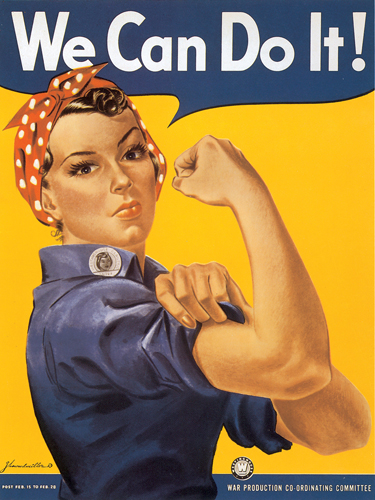
The next outfit i found was a youngish women who was wearing the outfit
of what the most well known propaganda sign 'we can do it' wore; a bandana with a working jump suit.
The use of the woman tensing her muscles opposed to the stereotypical
woman before the war started as they were seen to be in the domestic
part of society and men were supposedly part of the political part,
therefore having propaganda convincing woman to work within the time
period it was set shows the countries desperation to help build itself
back up.
Credit - Katy Ward
Friday, 16 January 2015
What we are aiming for
Level 1 0–23 marks
The work for the main task is possibly incomplete. There is minimal evidence in the work of the
creative use of any relevant technical skills such as:
• holding a shot steady, where appropriate.
• framing a shot, including and excluding elements as appropriate.
• using a variety of shot distances as appropriate
• shooting material appropriate to the task set.
• selecting mise-en-scène including colour, figure, lighting, objects and setting;
• editing so that meaning is apparent to the viewer.
• using varied shot transitions and other effects selectively and appropriately for the task set.
• using sound with images and editing appropriately for the task set.
• using titles appropriately.
Level 2 24–35 marks
There is evidence of a basic level of ability in the creative use of some of the following technical
skills:
• holding a shot steady, where appropriate.
• framing a shot, including and excluding elements as appropriate.
• using a variety of shot distances as appropriate.
• shooting material appropriate to the task set.
• selecting mise-en-scène including colour, figure, lighting, objects and setting.
• editing so that meaning is apparent to the viewer.
• using varied shot transitions and other effects selectively and appropriately for the task set.
• using sound with images and editing appropriately for the task set.
• using titles appropriately.
Level 3 36–47 marks
There is evidence of proficiency in the creative use of many of the following technical skills:
• holding a shot steady, where appropriate.
• framing a shot, including and excluding elements as appropriate.
• using a variety of shot distances as appropriate.
• shooting material appropriate to the task set.
• selecting mise-en-scène including colour, figure, lighting, objects and setting.
• editing so that meaning is apparent to the viewer.
• using varied shot transitions and other effects selectively and appropriately for the task set.
• using sound with images and editing appropriately for the task set.
• using titles appropriately.
Level 4 48–60 marks
There is evidence of excellence in the creative use of most of the following technical skills:
• holding a shot steady, where appropriate.
• framing a shot, including and excluding elements as appropriate.
• using a variety of shot distances as appropriate.
• shooting material appropriate to the task set.
• selecting mise-en-scène including colour, figure, lighting, objects and setting.
• editing so that meaning is apparent to the viewer.
• using varied shot transitions and other effects selectively and appropriately for the task set.
• using sound with images and editing appropriately for the task set.
• using titles appropriately.
The work for the main task is possibly incomplete. There is minimal evidence in the work of the
creative use of any relevant technical skills such as:
• recording voice(s) clearly in studio/confined setting.
• recording voice(s) clearly in location/outdoor interviews/presentations.
• accurately using language and register.
• integrating recorded material, as appropriate.
• editing and mixing sounds appropriately.
• editing to create continuity and meaning.
• integrating jingles, music, location sounds and sound effects, where appropriate.
Level 2 24–35 marks
There is evidence of a basic level of ability in the creative use of some of the following technical
skills:
• recording voice(s) clearly in studio/confined setting.
• recording voice(s) clearly in location/outdoor interviews/presentations.
• accurately using language and register.
• integrating recorded material, as appropriate.
• editing and mixing sounds appropriately.
• editing to create continuity and meaning.
• integrating jingles, music, location sounds and sound effects, where appropriate.
Level 3 36–47 marks
There is evidence of proficiency in the creative use of many of the following technical skills:
• recording voice(s) clearly in studio/confined setting.
• recording voice(s) clearly in location/outdoor interviews/presentations.
• accurately using language and register.
• integrating recorded material, as appropriate.
• editing and mixing sounds appropriately.
• editing to create continuity and meaning.
• integrating jingles, music, location sounds and sound effects, where appropriate.
Level 4 48–60 marks
There is evidence of excellence in the creative use of most of the following technical skills:
• recording voice(s) clearly in studio/confined setting.
• recording voice(s) clearly in location/outdoor interviews/presentations.
• accurately using language and register.
• integrating recorded material, as appropriate.
• editing and mixing sounds appropriately.
• editing to create continuity and meaning.
• integrating jingles, music, location sounds and sound effects, where appropriate.
I aim to get around Level 3 going on Level 4 within this unit of both video and audio, my best hope is to get Level 4 so therefore me and my coursework group will focus on our targets within the set instructions so that we can get our highest possible mark.
The work for the main task is possibly incomplete. There is minimal evidence in the work of the
creative use of any relevant technical skills such as:
• holding a shot steady, where appropriate.
• framing a shot, including and excluding elements as appropriate.
• using a variety of shot distances as appropriate
• shooting material appropriate to the task set.
• selecting mise-en-scène including colour, figure, lighting, objects and setting;
• editing so that meaning is apparent to the viewer.
• using varied shot transitions and other effects selectively and appropriately for the task set.
• using sound with images and editing appropriately for the task set.
• using titles appropriately.
Level 2 24–35 marks
There is evidence of a basic level of ability in the creative use of some of the following technical
skills:
• holding a shot steady, where appropriate.
• framing a shot, including and excluding elements as appropriate.
• using a variety of shot distances as appropriate.
• shooting material appropriate to the task set.
• selecting mise-en-scène including colour, figure, lighting, objects and setting.
• editing so that meaning is apparent to the viewer.
• using varied shot transitions and other effects selectively and appropriately for the task set.
• using sound with images and editing appropriately for the task set.
• using titles appropriately.
Level 3 36–47 marks
There is evidence of proficiency in the creative use of many of the following technical skills:
• holding a shot steady, where appropriate.
• framing a shot, including and excluding elements as appropriate.
• using a variety of shot distances as appropriate.
• shooting material appropriate to the task set.
• selecting mise-en-scène including colour, figure, lighting, objects and setting.
• editing so that meaning is apparent to the viewer.
• using varied shot transitions and other effects selectively and appropriately for the task set.
• using sound with images and editing appropriately for the task set.
• using titles appropriately.
Level 4 48–60 marks
There is evidence of excellence in the creative use of most of the following technical skills:
• holding a shot steady, where appropriate.
• framing a shot, including and excluding elements as appropriate.
• using a variety of shot distances as appropriate.
• shooting material appropriate to the task set.
• selecting mise-en-scène including colour, figure, lighting, objects and setting.
• editing so that meaning is apparent to the viewer.
• using varied shot transitions and other effects selectively and appropriately for the task set.
• using sound with images and editing appropriately for the task set.
• using titles appropriately.
Audio
Level 1 0–23 marksThe work for the main task is possibly incomplete. There is minimal evidence in the work of the
creative use of any relevant technical skills such as:
• recording voice(s) clearly in studio/confined setting.
• recording voice(s) clearly in location/outdoor interviews/presentations.
• accurately using language and register.
• integrating recorded material, as appropriate.
• editing and mixing sounds appropriately.
• editing to create continuity and meaning.
• integrating jingles, music, location sounds and sound effects, where appropriate.
Level 2 24–35 marks
There is evidence of a basic level of ability in the creative use of some of the following technical
skills:
• recording voice(s) clearly in studio/confined setting.
• recording voice(s) clearly in location/outdoor interviews/presentations.
• accurately using language and register.
• integrating recorded material, as appropriate.
• editing and mixing sounds appropriately.
• editing to create continuity and meaning.
• integrating jingles, music, location sounds and sound effects, where appropriate.
Level 3 36–47 marks
There is evidence of proficiency in the creative use of many of the following technical skills:
• recording voice(s) clearly in studio/confined setting.
• recording voice(s) clearly in location/outdoor interviews/presentations.
• accurately using language and register.
• integrating recorded material, as appropriate.
• editing and mixing sounds appropriately.
• editing to create continuity and meaning.
• integrating jingles, music, location sounds and sound effects, where appropriate.
Level 4 48–60 marks
There is evidence of excellence in the creative use of most of the following technical skills:
• recording voice(s) clearly in studio/confined setting.
• recording voice(s) clearly in location/outdoor interviews/presentations.
• accurately using language and register.
• integrating recorded material, as appropriate.
• editing and mixing sounds appropriately.
• editing to create continuity and meaning.
• integrating jingles, music, location sounds and sound effects, where appropriate.
I aim to get around Level 3 going on Level 4 within this unit of both video and audio, my best hope is to get Level 4 so therefore me and my coursework group will focus on our targets within the set instructions so that we can get our highest possible mark.
Tuesday, 13 January 2015
Test Shots for 180 Degree Rule
This is the first take of our short video for the 180 degree rule. The reason I would like to re-shoot is because while editing this video I noticed a couple of errors. For starters it's not done and lacks any sense of story or narrative because the filming was all wrong. Another point is the continuity errors with the hand that Katy uses to be a gun. This is an issue because the hand changes making the story even harder to follow. To improve this I want to follow the storyboard more closely because then it would avoid Katy switching hands. Furthermore I want to have a small fight and use my camera with an X-grip to stabilize the camera while it tracks the action because the last shot was horrible because of shakiness.
Overall it was a good first attempt however I really want to improve this because I know we can do better.
Sunday, 11 January 2015
Quick Blog post on Rule of Thirds
The rule of thirds is a concept in video and film production, in which the frame is divided into 9 imaginary sections. The Points of interest should lie on the grid lines, either one third or two thirds up the frame horizontally, or across vertically, compared to being positioned in the centre of the frame.
 |
| The Rule of Thirds |

Subscribe to:
Posts (Atom)